

// The Symbolic Foundation
Ekam Lipi & the Bhav Framework
Before the Helix Engine builds a single Digital Twin or Responsive Sigil, two proprietary layers decide what that identity should even look and feel like. Ekam Lipi (“the unified script”) is the symbolic alphabet. The Bhav Framework (“bhav” — felt emotional state) is what determines which parts of that alphabet belong to your brand.
// Two Layers, One System
Emotion First. Then Encoding.
Every MTRX engagement runs the brand or founder through both layers before any design work begins.
01 — The Bhav Framework
Emotional Discovery & Mapping
Bhav (भाव) is the Sanskrit register for a felt, lived emotional state — not a mood board. Before we design anything, we map the brand or founder's core emotional register: is this identity built on Agni's urgency, Jal's fluidity, Vayu's momentum, Vriksha's rootedness, or Shoonya's untapped potential? That answer — not a client's stated preference for "clean and modern" — determines the glyphs, stroke weight, and motion signature the Helix Engine is allowed to use.
भाव — felt emotional state, disposition02 — Ekam Lipi
The Symbolic Encoding Language
Ekam Lipi (एकम् लिपि) is the visual alphabet itself — a closed set of elemental glyphs and codex marks, each with a fixed meaning, that the Helix Engine composes into a brand-specific sigil. It's why a MTRX sigil isn't a generic geometric logo: every stroke traces back to a symbol with a defined Bhav attached to it.
एकम् लिपि — "the unified script"In short: the Bhav Framework decides what a brand feels like. Ekam Lipi decides how that feeling gets drawn. The Helix Engine then turns the result into living digital assets, and ViSE Telemetry proves whether it's working.
// The Root Alphabet
The Five Elements + The Cosmic Mark
Every Ekam Lipi composition is built from six root glyphs, drawn from the Pancha Bhoota — the five classical elements — plus a unifying mark for identities that span more than one register.
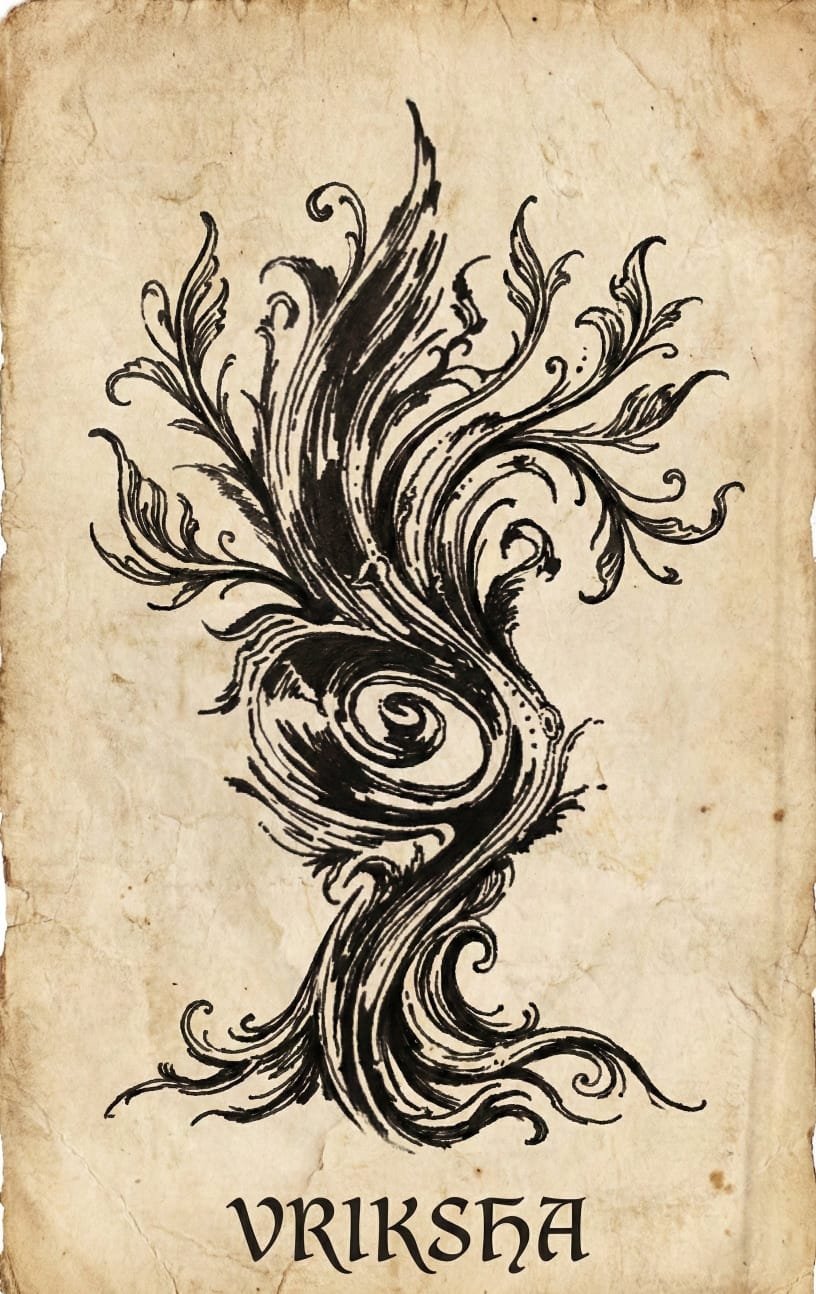
Vriksha
वृक्ष — "the tree" Growth, lineage, rootednessEncodes brands built on compounding growth and heritage — roots that deepen as the canopy expands. Used for institutions, legacy rebrands, and founders scaling from a single strong root system.
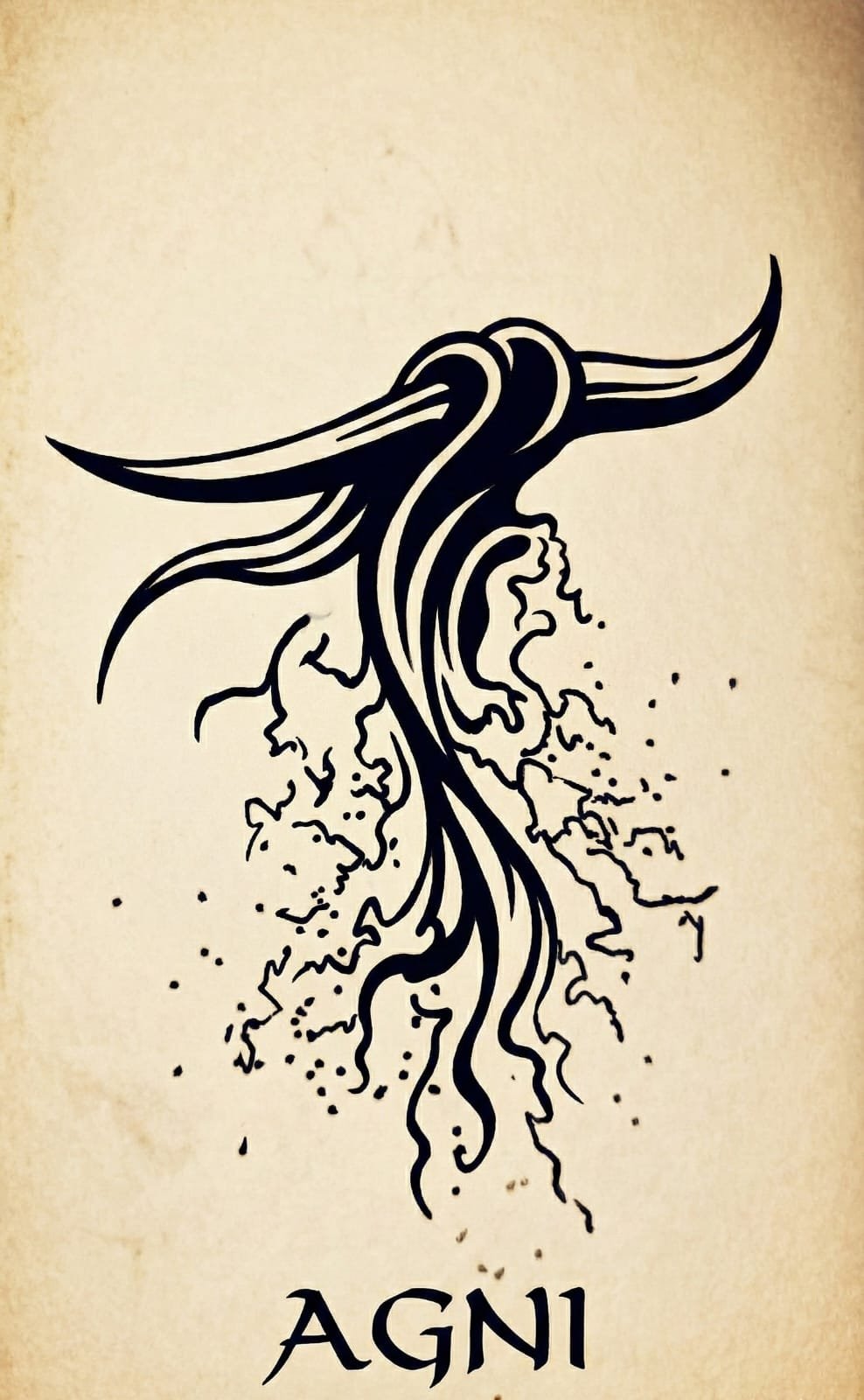
Agni
अग्नि — "fire" Transformation, momentum, convictionThe mark of category-defining ambition — brands entering a market to disrupt it. Sharp, upward strokes signal urgency and conviction across pitch decks and launch identities.
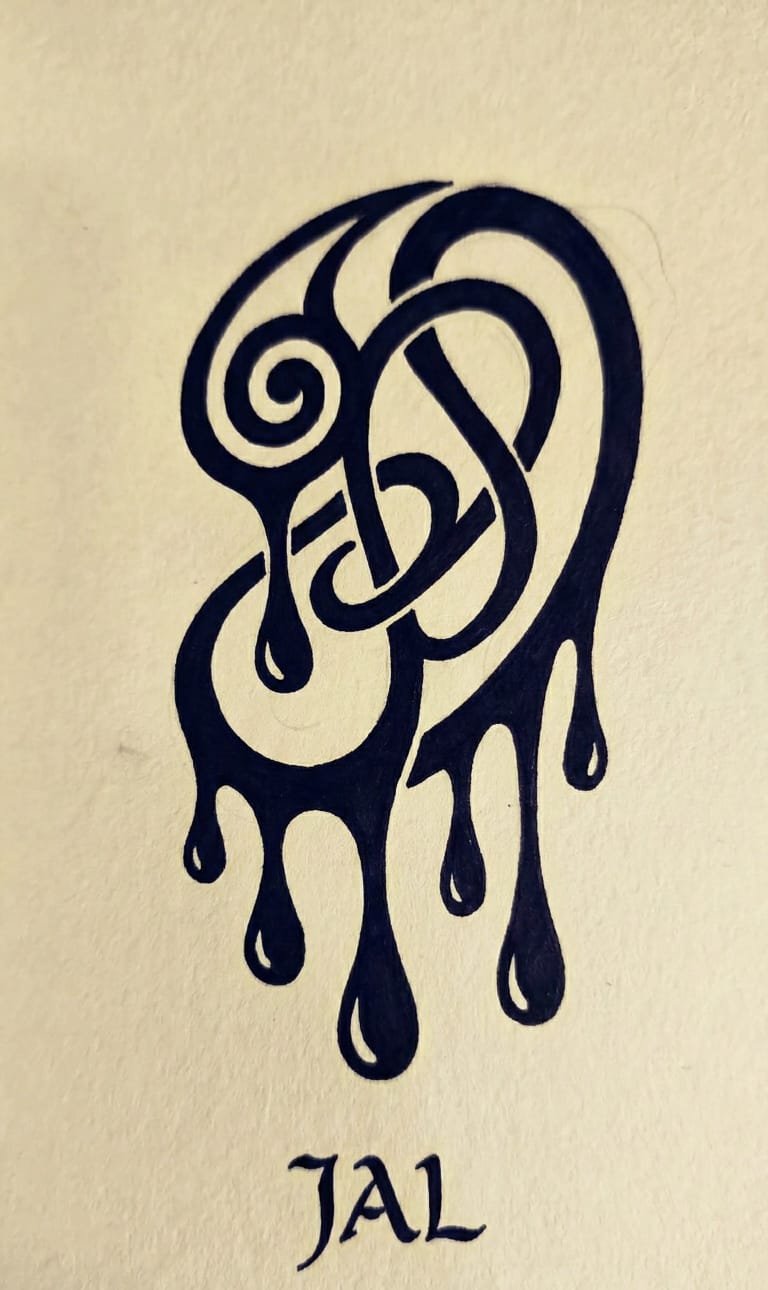
Jal
जल — "water" Flow, adaptability, emotional depthReserved for lifestyle, wellness, and D2C identities that need to feel fluid across a fragmented customer journey — the same mark bending naturally from packaging to a 6-second Reel.
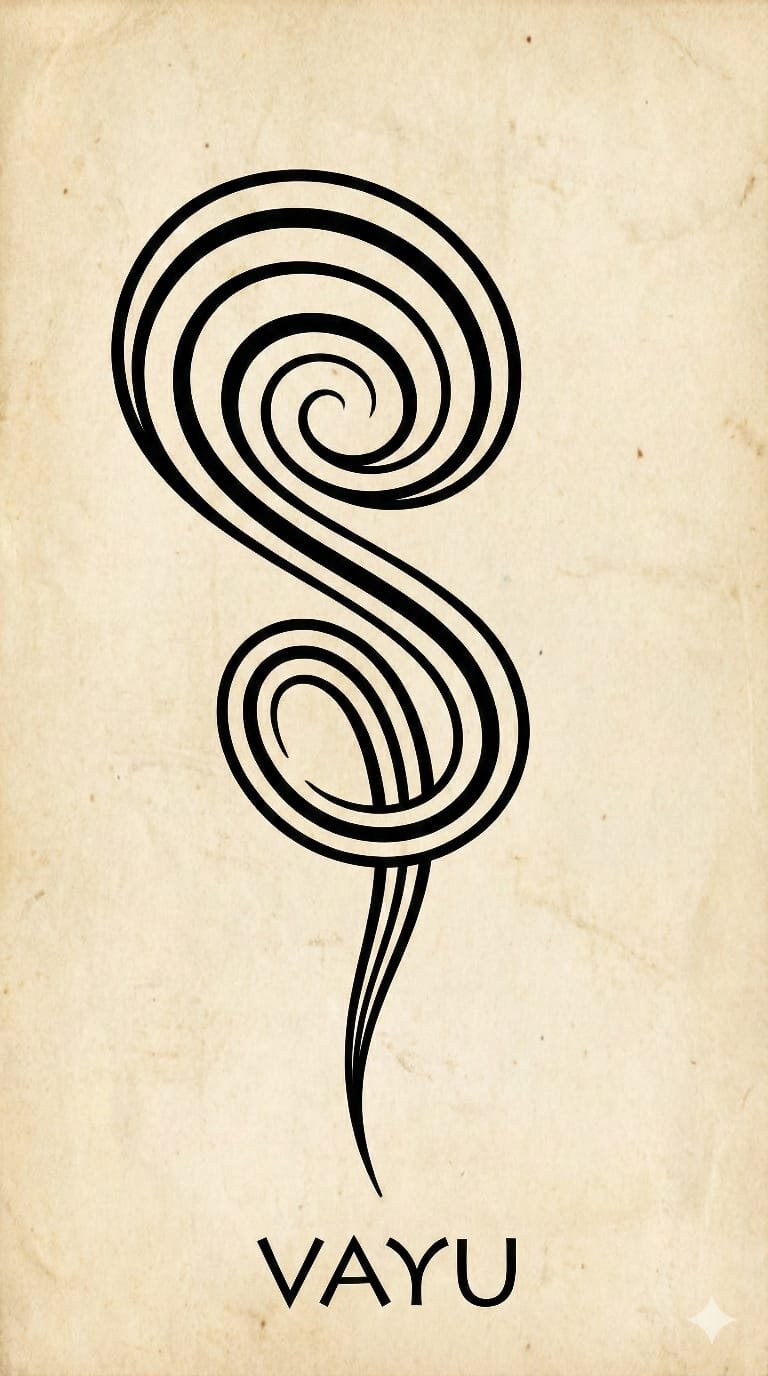
Vayu
वायु — "air" Momentum, reach, invisibility-made-visibleA spiral drawn for brands whose product is felt before it is seen — connectivity, logistics, and platforms. Built to move: it's the glyph most often set into motion inside a Digital Twin.
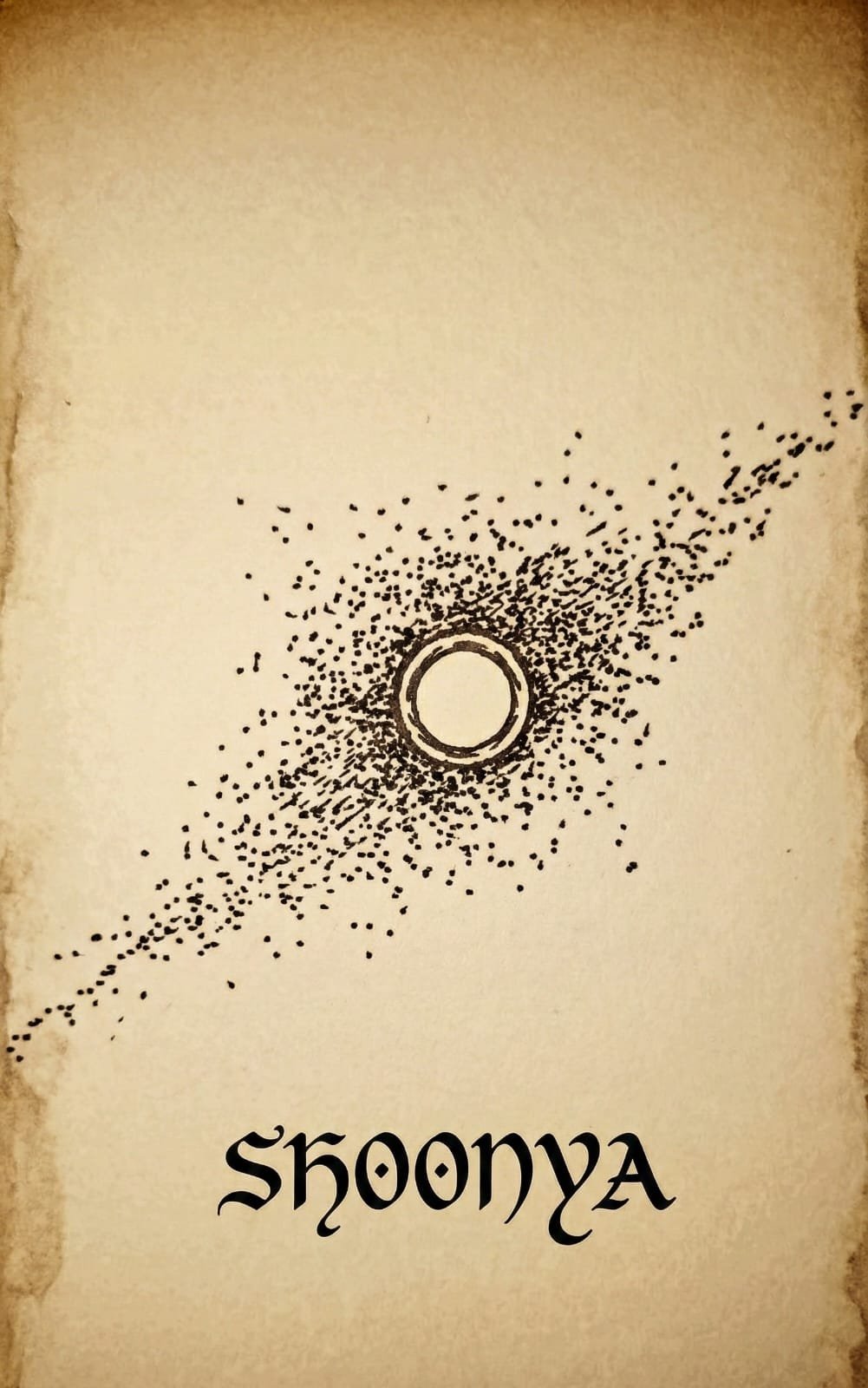
Shoonya
शून्य — "the void / zero" Potential, minimalism, infinite capacityThe scatter-to-center glyph — chaos resolving into a single point. Assigned to founders and deep-tech brands whose value is in what they haven't built yet: unrealized, infinite potential.
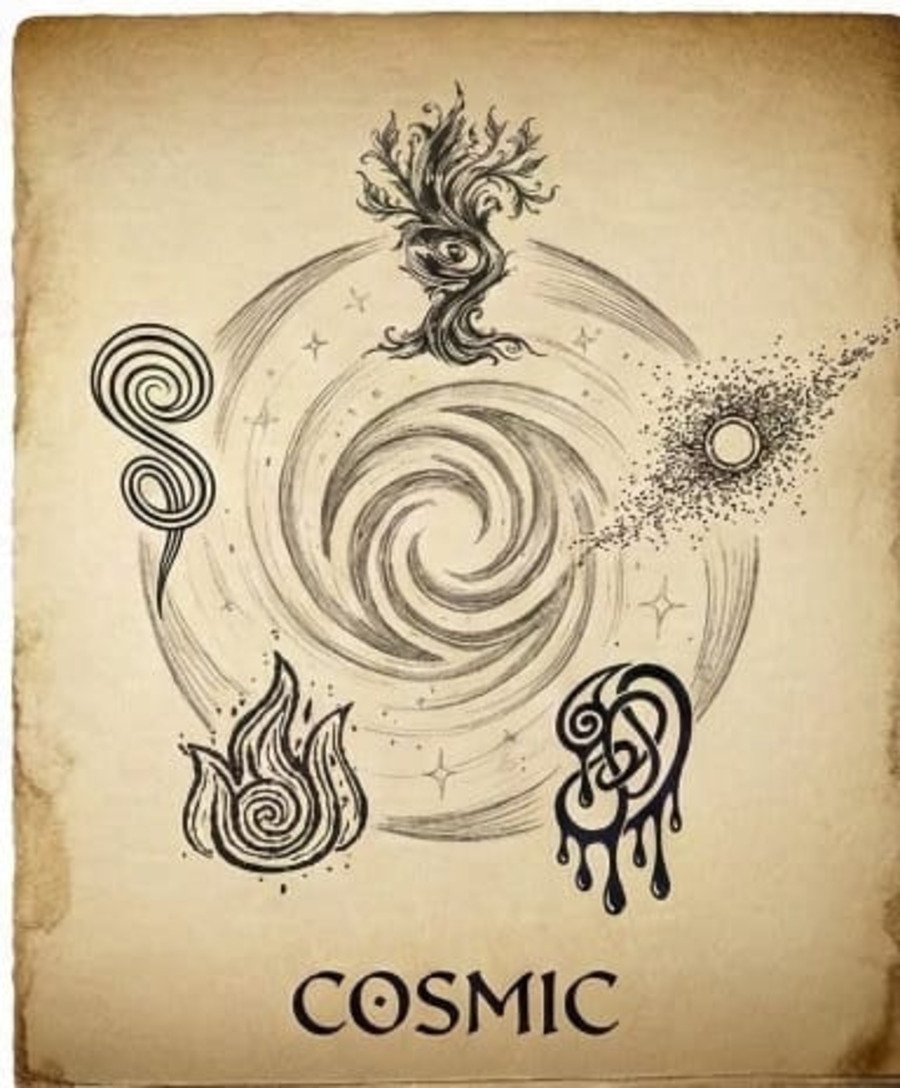
Cosmic
The unifying mark Synthesis — all five elements in one systemWhen a brand's Bhav Framework spans more than one register — a founder who is both Agni and Jal — the Cosmic composition fuses the relevant elemental glyphs into a single sigil instead of forcing a single element to carry the whole identity.
// Beyond the Alphabet
The Codex Marks
Four deeper compositions, each built for a specific class of engagement — where a single elemental glyph isn't enough to carry the whole identity.
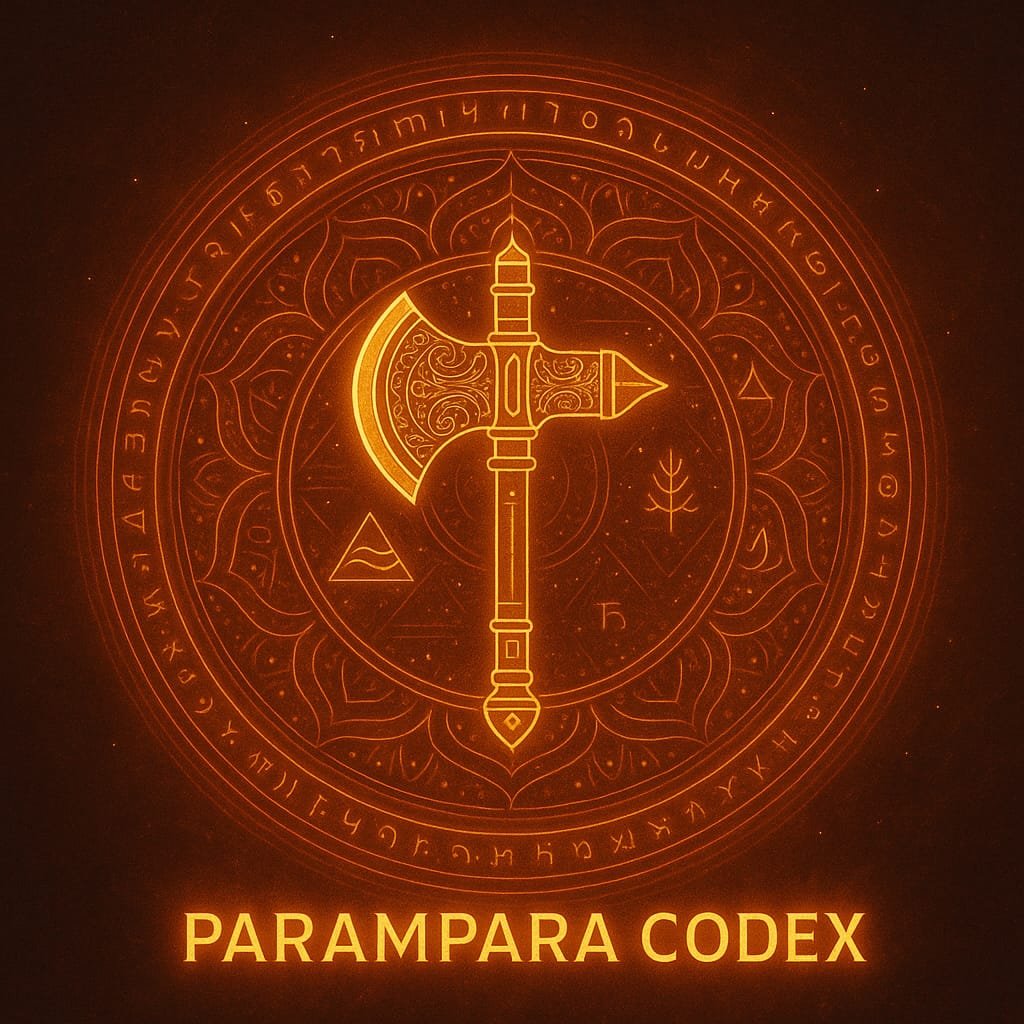
Parampara Codex
परम्परा — "lineage, unbroken tradition"The ring of proto-script and mandala geometry used when encoding institutional and legacy brands — universities, incubators, family-run houses — where the sigil has to carry decades of trust, not just a single launch moment.
Used for: Institutions & Entities tier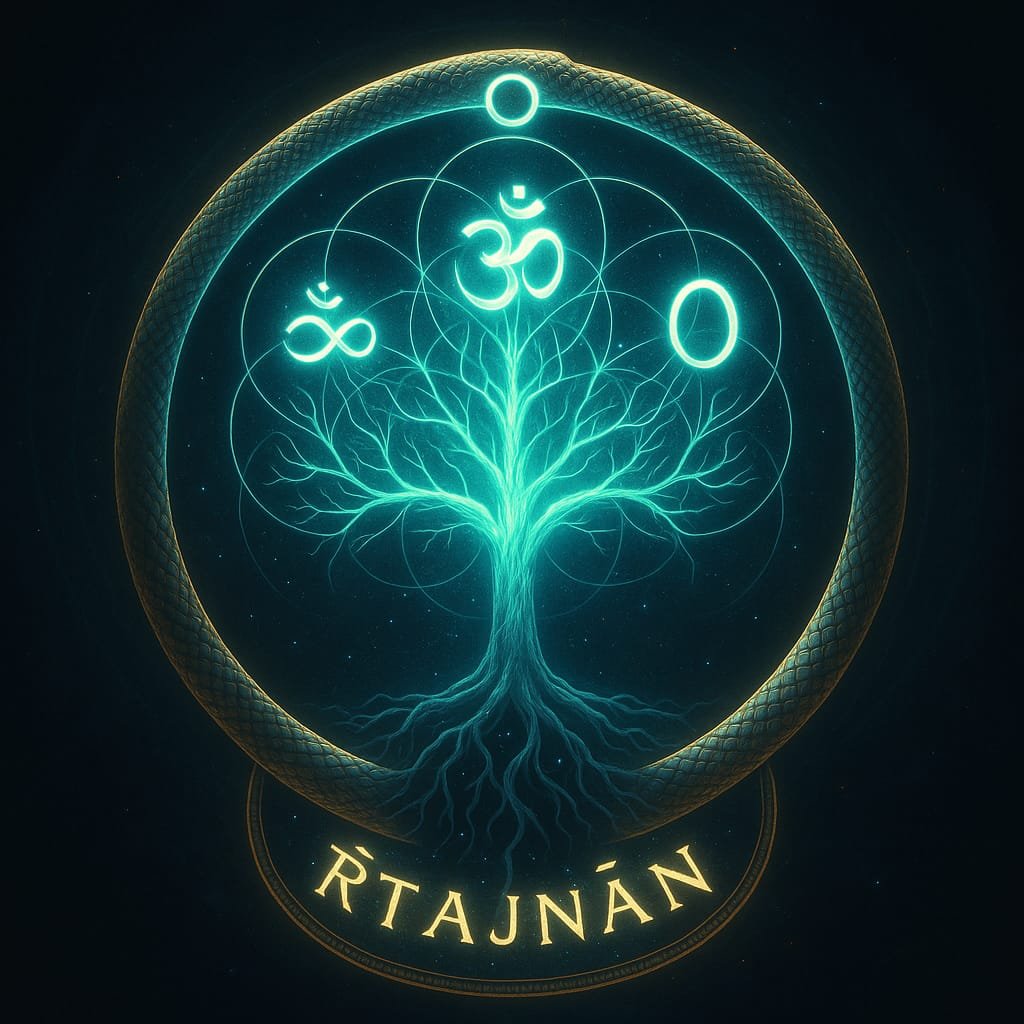
Rtajnān
ऋत-ज्ञान — "knowing of cosmic order"A tree-of-knowledge glyph bound inside an ouroboros — drawn for brand ecosystems rather than single products: ventures with multiple verticals that need one root identity to hold them together.
Used for: Multi-vertical brand ecosystems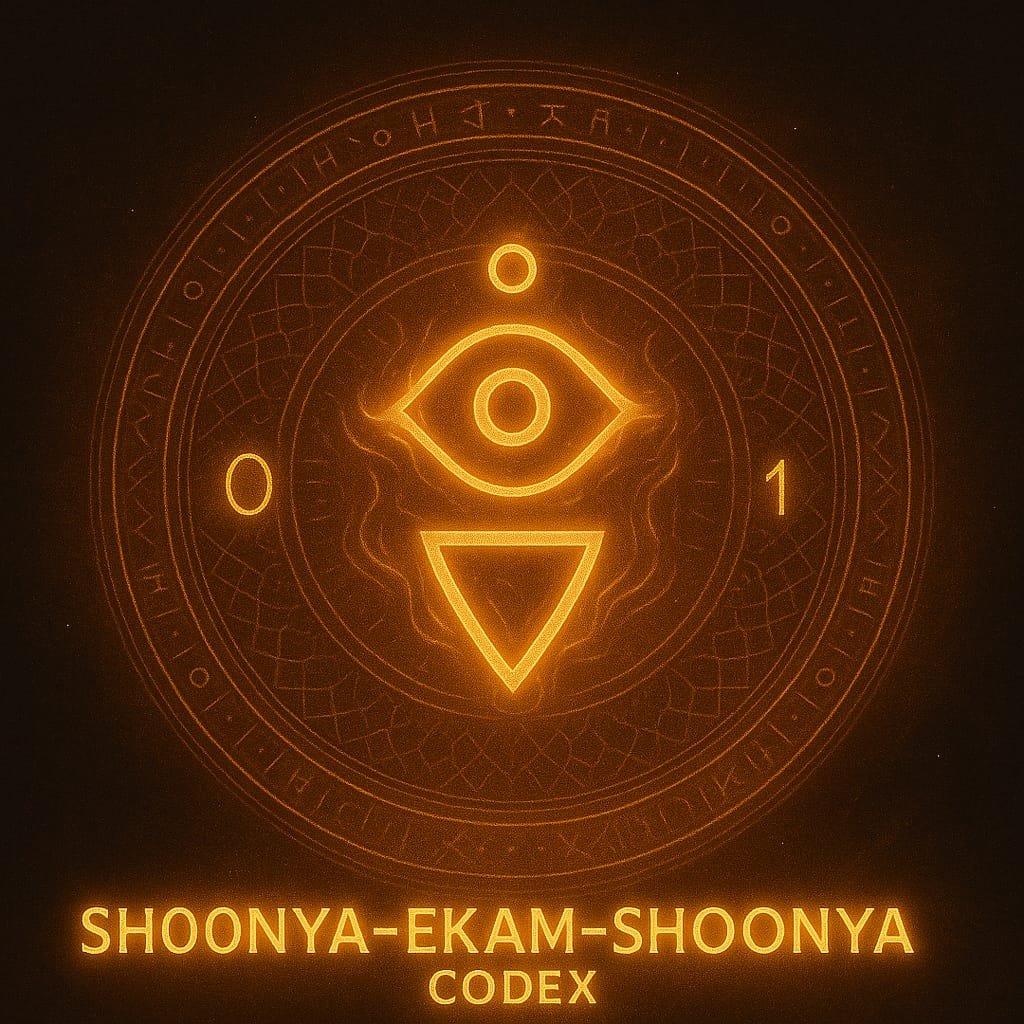
Shoonya-Ekam-Shoonya Codex
शून्य-एकम्-शून्य — "void, one, void"The philosophical spine of the entire system: 0 and 1 read the same whether you're looking at a binary data stream or the Vedic concept of Shoonya (void) resolving into Ekam (unity). It's the reasoning behind treating brand identity as encodable, algorithmic language rather than decoration — the same logic ViSE Telemetry runs on downstream.
Used for: The system's founding logic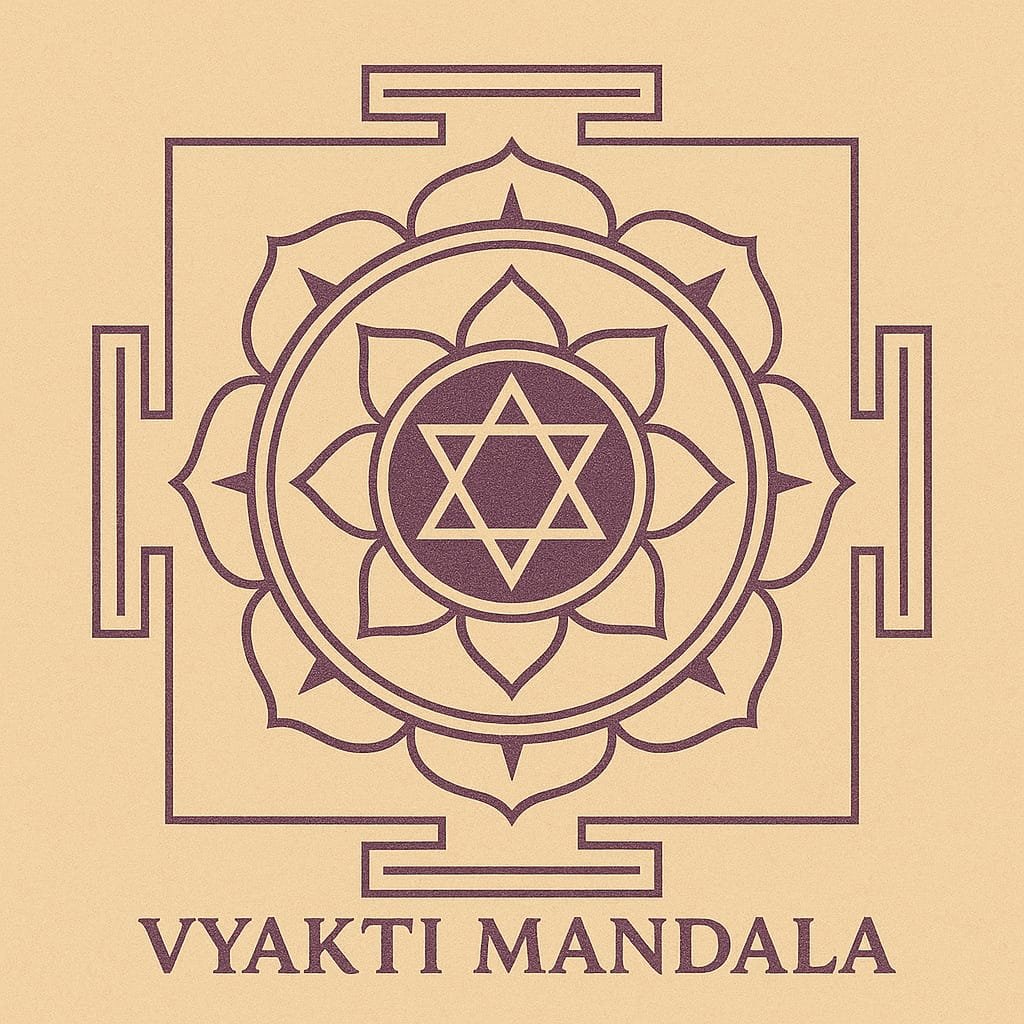
Vyakti Mandala
व्यक्ति — "the individual person"A personal-identity yantra built around a six-point star — the geometry behind every Personal Sovereign Engine engagement, used to encode a single human's presence (voice, face, point of view) rather than a company's.
Used for: Individuals tier — Personal Sovereign Engine// One Sigil, Every Surface
The Sigil Mark, in Practice
A finished Ekam Lipi sigil isn't a single flat file — it's specified to hold up across every tonal environment a brand actually lives in: dark mode, light mode, and mono print.
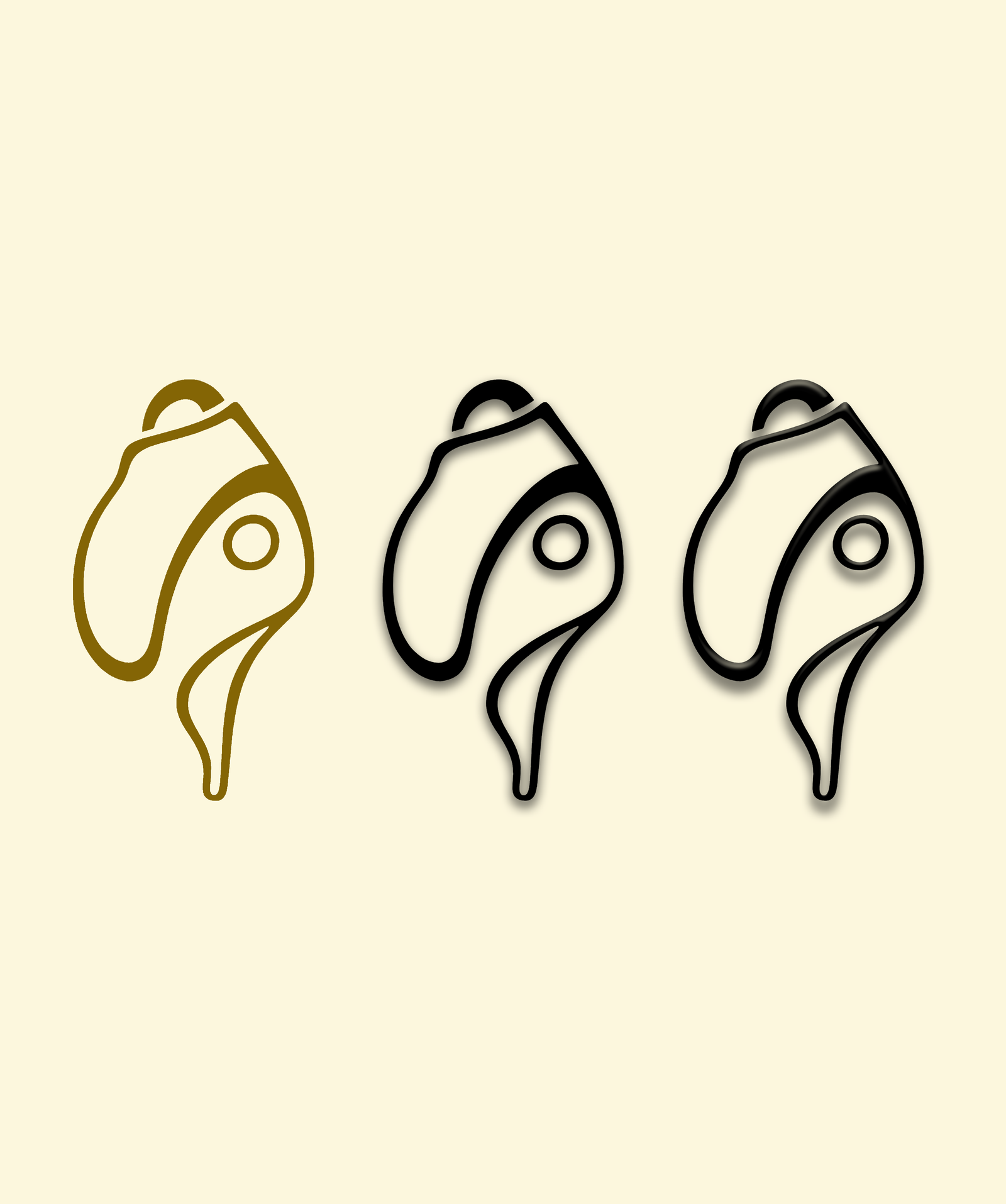
Built for dark mode from the first sketch
Because the Helix Engine deploys every sigil across spatial web, social, and dark-mode-first interfaces, each Ekam Lipi mark is validated in all three tonal states before it ships — not adapted after the fact. This is the same responsive-sigil principle described in the Helix Engine on the technology page.
// Designed, Not Generated
From Concept to Codex
Every glyph in the Ekam Lipi system starts as an ink or pencil study before it's ever vectorized. A small selection from the working sketchbook:
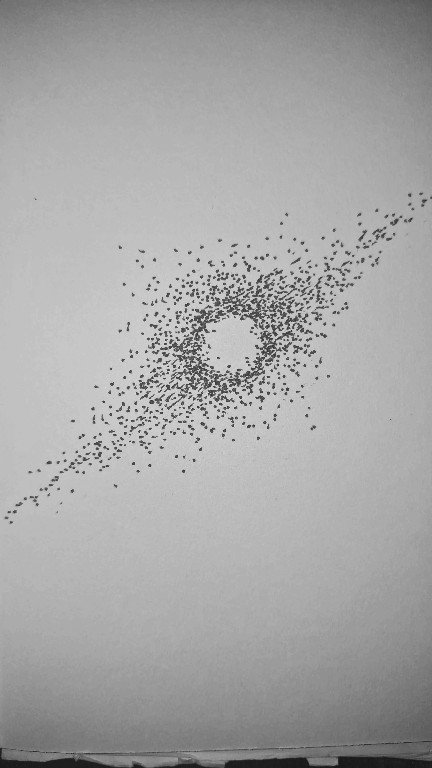
Radial burst study — the raw gesture behind the Shoonya scatter pattern.
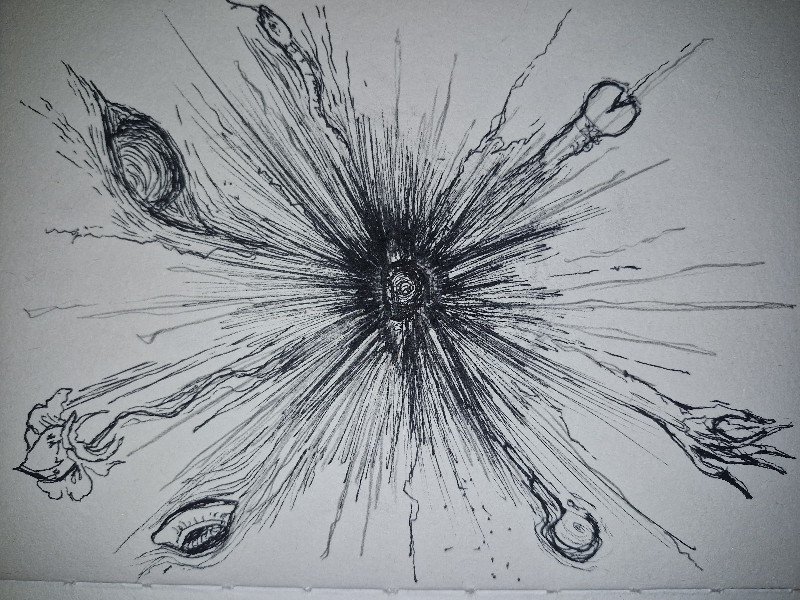
Idea-birth study — the seed sketch for how Digital Twins visualize a founder's thinking.
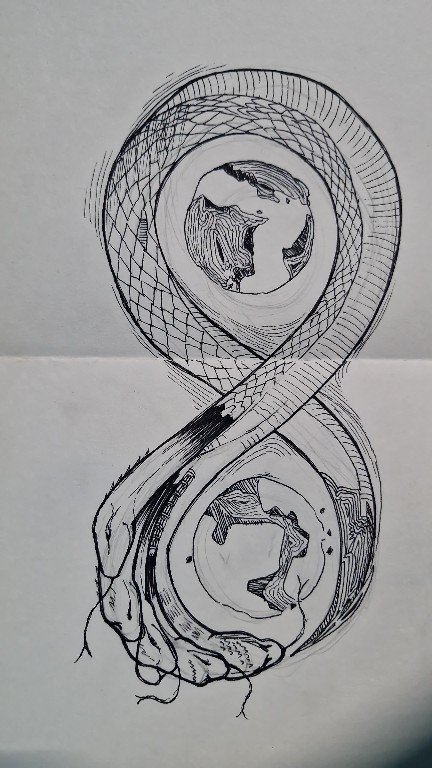
Ouroboros cross-hatch study — an early pass at the Shoonya circuit mark.
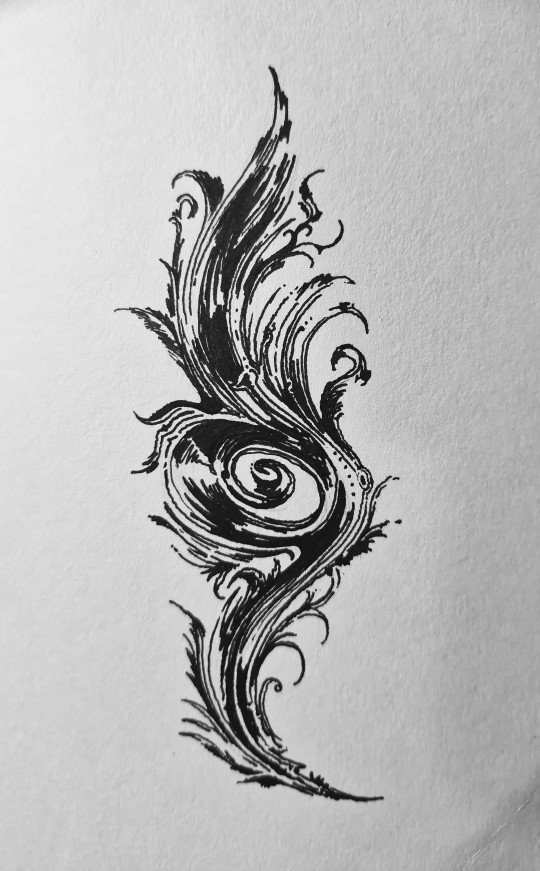
Flame-swirl ink study — a working sketch for the Agni glyph family.
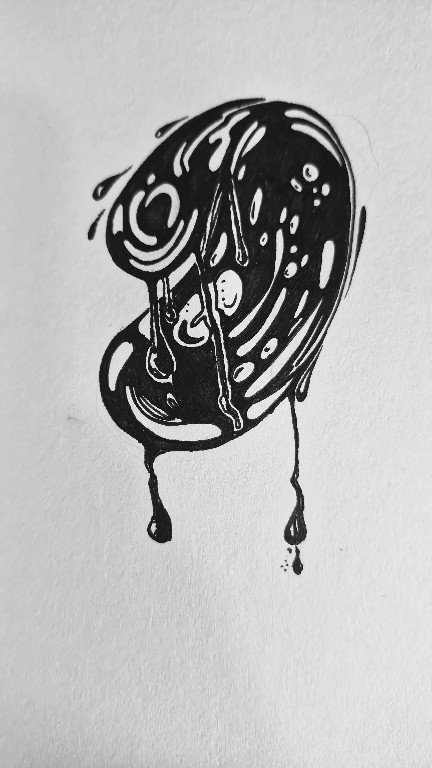
Ink-bloom study — exploring the Jal glyph's drip-and-pool weighting.
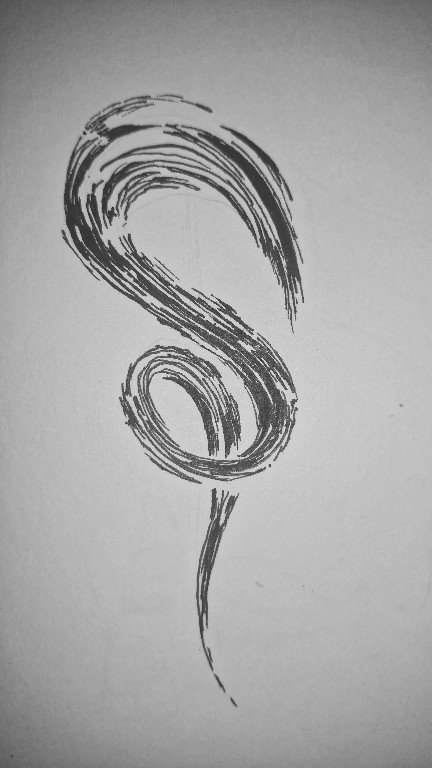
Binary-spiral study — the first pass at fusing code with the Vayu spiral.
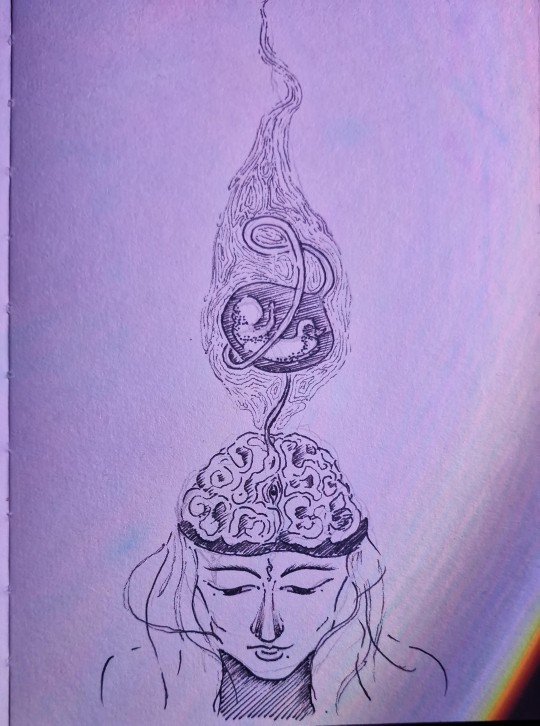
Vyakti figure study — an early exploration for the Individuals sigil language.
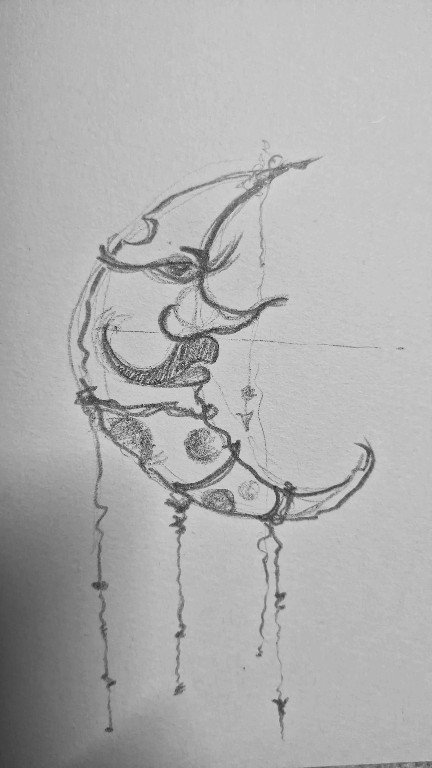
Crescent study — a discarded direction, kept for the archive.
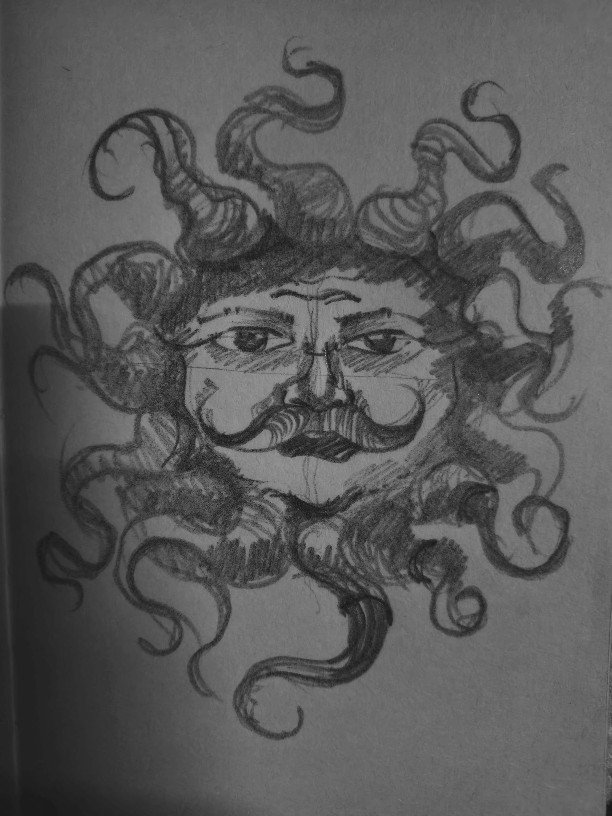
Sūrya-mukha study — a radiant sun-face exploration, shelved in favor of the cleaner Agni glyph but kept for high-visibility launch mark research.
Claim Your Audit
See Your Brand's Bhav, Encoded
The Identity & Telemetry Audit includes a first pass at where your brand or personal presence sits inside the Ekam Lipi system — before any design work is commissioned.